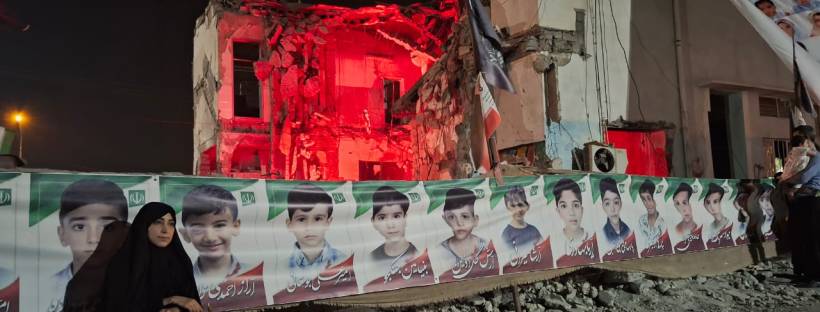
A Story of Children, Mothers, Fathers, the New School Year, and the Universal Struggle for Freedom
In the calendar of human life, some days are more than just dates.
They become dividing lines between “before” and “after.”
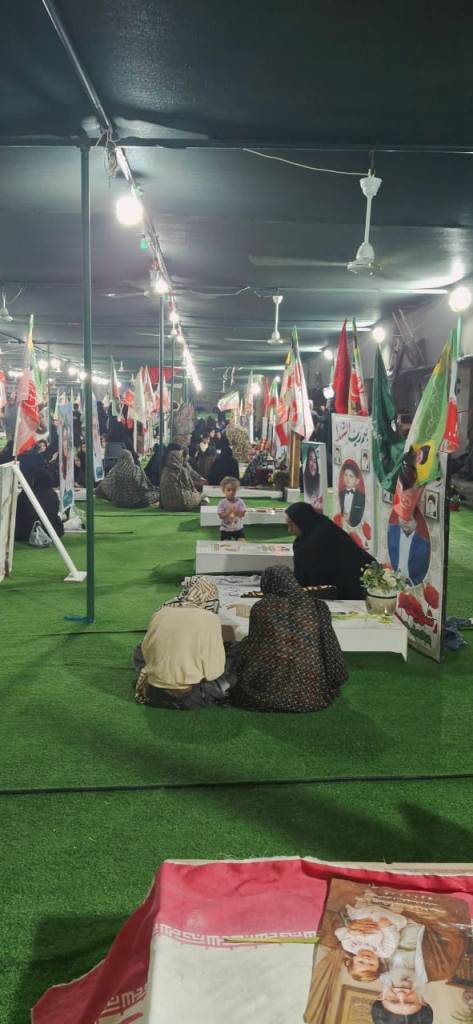
February 28, 2026, became such a day for the families of Minab.
It was a morning that could have begun like any other: a child getting dressed for school, a mother preparing her child’s schoolbag, a father accompanying his child to school, and a teacher preparing to begin another day of classes.
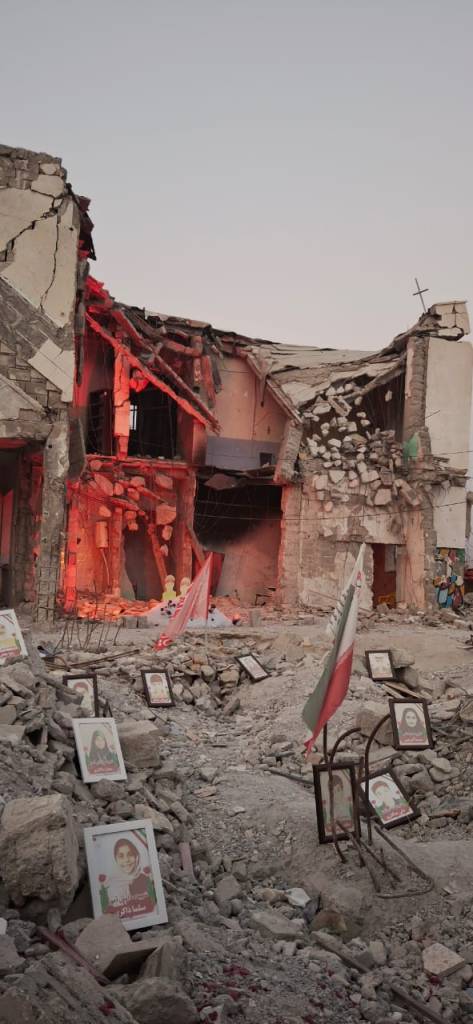
But at Shajareh Tayebeh Elementary School in Minab, in Iran’s southern Hormozgan Province, a missile strike during school hours changed the lives of hundreds of families forever.
Different figures have been reported regarding the exact number of victims. Iranian officials initially reported 168 deaths, while the Minab prosecutor later stated in April 2026 that the final figure announced by local authorities was 156. United Nations reporting referred to more than 150 victims, including around 120 children.
But behind every number, there is a human being.
A name.
A face.
A family.
An empty seat.
And a child who will never return home.
A School That Is No Longer Just a School
Before the tragedy, Shajareh Tayebeh was simply a school for the children of Minab.
A place to learn.
A place to make friends.
A place to draw pictures.
A place to dream about the future.
Children do not learn only mathematics, science, or language at school. They begin to create their first vision of the future.
One dreams of becoming a doctor.
Another wants to become a teacher.
Another an engineer.
Another an artist.
One dreams of seeing the sea.
Another dreams of changing the world.
But war can sometimes take away the future before a child even has the opportunity to choose a dream.
Reports from the United Nations human rights system have emphasized that schools are civilian objects and that children are entitled to special protection during armed conflict. UN experts called for an independent investigation into the attack on Shajareh Tayebeh School and stressed that killing children in a classroom can never be justified.
This tragedy raises a fundamental question for the world:
If a school is not safe, where is a child supposed to feel safe?
The Children Who Will Never Return to Their Classrooms
Imagine a mother waking her child every morning for school.
Perhaps the child is still sleepy.
Perhaps breakfast has not been finished.
Perhaps the mother says, for the hundredth time:
“Did you take your schoolbag?”
And the child rushes out of the house.
Perhaps the mother stands by the window and watches the child leave.
She imagines hearing the front door open a few hours later.
She imagines her child walking into the house and saying:
“Mom, I’m hungry.”
But some mothers in Minab will never hear that voice again.
News reports described families rushing to the school after the attack, searching for their children. Some victims were difficult to identify, leaving families dependent on personal belongings, clothing, jewelry, or other identifying signs.
Perhaps this is one of the cruelest dimensions of war:
War does not only take lives; sometimes it takes away even the possibility of saying goodbye.
Mothers Who Sent Their Children to School, Not to War
No mother sends her child to school in the morning expecting to receive news of their death in the afternoon.
A mother sends her child to school to build a future.
That is why the grief of the mothers of Minab is not simply the grief of losing a loved one.
It is the mourning of a future that never had the chance to be born.
The doctor who never became a doctor.
The teacher who never became a teacher.
The writer who never became a writer.
The mother who never became a mother.
The father who never became a father.
The human being who could have lived, loved, learned, created, and contributed to the world.
Perhaps that is why the images of grieving families can be understood even by someone living thousands of miles away from Minab.
A mother is a mother.
A child is a child.
Grief needs no translation.
Fathers Who Are Still Waiting
The Associated Press reported the story of Heydar Sadeghi, a grandfather who lost his 11-year-old granddaughter in the attack. After the tragedy, he repeatedly returned to the ruins of the school and sat beside them. His granddaughter, Hami, and the child’s mother, who was a teacher at the school, were among those killed.
The image is difficult to forget:
A father or grandfather sitting beside a school.
A school where the bell no longer rings.
A courtyard where the sound of children running can no longer be heard.
Classrooms where small hands will never again rise to answer a question.
And a desk where a child once sat and thought about the future.
Now, instead of waiting for their children to return from school, mothers and fathers must live with their memories.
Perhaps this is one of the most painful forms of separation:
A child who will never return, yet whose presence never truly leaves the home.
A New School Year: Returning to a School That Is No Longer the Same
A new school year has now begun.
In many parts of the world, the beginning of a school year is an ordinary event.
Children put on their school uniforms.
Parents take photographs.
Schoolbags are prepared.
New notebooks are purchased.
Teachers enter their classrooms.
But for the families of Minab, the phrase “a new school year” carries a different meaning.
When a school becomes inseparably connected to the memory of children who were lost, returning to school is no longer simply a return to education.
It is a return to memory.
To empty spaces.
To photographs on walls.
To names that no longer answer.
To children who should have been sitting in classrooms today.
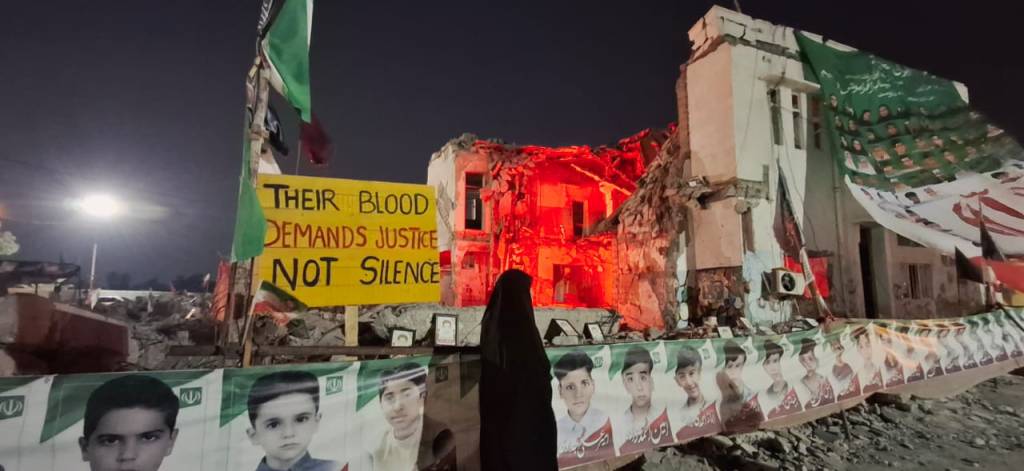
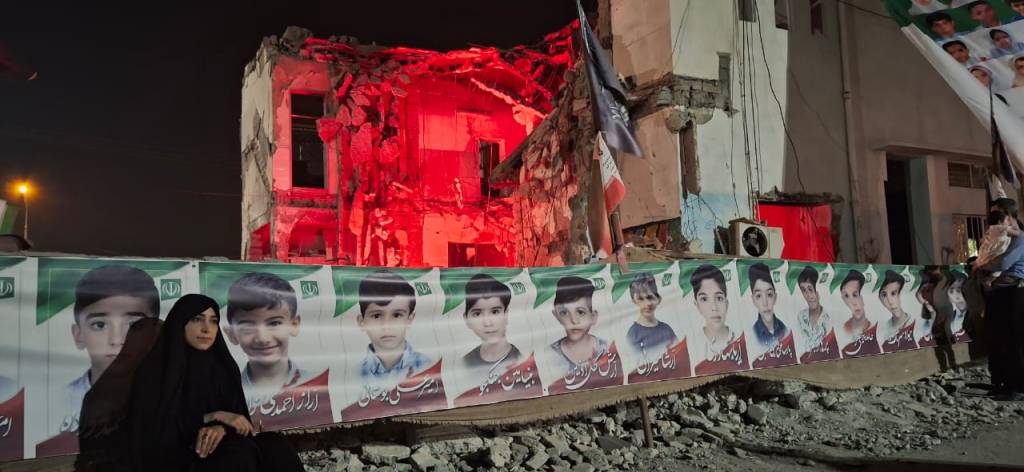
Reports have described the site of Shajareh Tayebeh School as a place of mourning and remembrance, with photographs of the children and teachers who lost their lives displayed around the ruins.
Perhaps this is where we must redefine the meaning of a “school.”
A school is not merely a building.
A school is a promise of the future.
And an attack on a school, whether deliberate or resulting from a serious failure to distinguish civilian from military targets, is not merely the destruction of walls.
It is an assault on the possibility of a future.
Freedom: When the Right to Live Is the First Freedom
When we speak about freedom, we usually think of freedom of expression, freedom of thought, freedom of choice, and political freedom.
All of these matter.
But before them lies a fundamental freedom:
Freedom from the fear of death.
A child must be free to be a child.
Free to play.
Free to ask questions.
Free to dream.
Free to go to school.
Free to imagine tomorrow.
If a child cannot safely walk into a classroom, how can we speak meaningfully about the future, progress, and freedom?
For a child, freedom begins in its simplest form:
Being able to leave home in the morning while their family is confident that they will return safely.
Freedom Without Hatred
Speaking about freedom must not mean creating hatred between peoples.
The children of Minab are victims of a conflict, but their suffering should never become a justification for hatred against an entire nation, ethnic group, or society.
There must be a distinction between people and the decisions made by governments or military forces.
An American child is not responsible for the decision of a military official.
An Iranian child is not responsible for the decisions of any political leader.
Children on either side of a border are not each other’s enemies.
They are simply children.
Perhaps one of the deepest forms of the struggle for freedom is precisely this:
Not allowing children to become instruments of hatred among adults.
The Rights of Children Are Not a National Issue; They Are a Human Issue
For an international audience, one point must be clear:
The tragedy of Shajareh Tayebeh is not only an Iranian issue.
It concerns the rights of children.
The safety of schools.
The responsibilities of parties to armed conflicts.
The protection of civilians.
The right to education.
And accountability.
Human Rights Watch called for an investigation into the attack as a possible war crime and emphasized the need to independently examine an attack on an elementary school where large numbers of civilians were present.
International humanitarian law also establishes important protections for civilians and educational facilities during armed conflict.
Therefore, the question surrounding Shajareh Tayebeh is not only:
“Who was responsible?”
The larger question is:
What mechanisms must exist to ensure that no child, anywhere in the world, becomes the victim of such an attack again?
One Classroom for the Entire World
Perhaps when the world speaks about Shajareh Tayebeh, it should not speak only about death.
It should also speak about life.
About children who loved football.
About children who drew pictures.
About girls who dreamed of growing up.
About mothers who had plans for their children’s futures.
About fathers who worked to buy school supplies and uniforms.
About teachers who wanted to educate the next generation.
Victims of war should not be remembered only as numbers.
Every child was an entire world.
A small world carrying enormous dreams.
And when a child dies, it is not only one person who is lost.
A part of the world’s future is lost as well.
The Mothers of Minab and the Meaning of Motherhood
Mothers who lose a child never experience “healing” in the ordinary sense of the word.
Time may pass.
The house may become orderly again.
Clothes may remain in a closet.
School notebooks may still lie somewhere in a corner.
But the mother knows that something has changed forever.
She may laugh again.
She may return to life.
She may attend school ceremonies.
But inside her, one seat will always remain empty.
The seat of her child.
Perhaps the international community has a responsibility to stand beside these mothers—not only with sympathy, but through demands for truth, independent investigation, psychological and social support for families, and guarantees that such tragedies will not happen again.
Grief is a right.
But justice is also a right.
Shajareh Tayebeh: A Name That Must Remain
“Shajareh Tayebeh” can be translated as “the good tree” or “the pure tree.”
It is a striking name for a school that is now remembered through the children who were lost there.
A tree may lose a branch, but it still has roots.
Perhaps Shajareh Tayebeh, too, is now more than the name of a building.
It has become the name of a question for the entire world:
Do children have the right to live without fear?
The answer must be clear:
Yes.
Every child has that right.
The right to go to school.
The right to live.
The right to dream.
The right to choose their future.
And no political, military, or ideological power should take that right away from them.
From Minab to the World
If a message from Minab is to reach the world, perhaps it should not be only a message of grief.
It should also be a message of life.
We should say:
We will not forget the children who were killed.
We will not reduce their names to numbers.
We will not abandon their mothers.
We will not forget their fathers.
We will defend the right of children to education and life.
And we will not demand freedom only for ourselves.
A genuine commitment to freedom acquires meaning when the life of a defenseless child—regardless of nationality, religion, ethnicity, or political borders—is considered valuable.
An Iranian child, an American child, a Palestinian child, a Ukrainian child, an African child, or a child anywhere else in the world is, before belonging to any country, a human being.
And every human being has the right to live.
Conclusion
This year, as millions of children around the world pick up their schoolbags, perhaps we should pause for a moment and think of Minab.
Think of a school that once echoed with the voices of children.
Think of mothers who waited at the door.
Think of fathers who searched through the rubble for a sign of their children.
Think of teachers who will never again stand behind their desks.
And think of children who were supposed to be growing up today.
Perhaps the best memorial for them is not simply to mourn.
It is to learn from them.
To learn that schools must be safe.
Children must be protected.
Civilians must not be targets of war.
Truth must be investigated.
Accountability must be possible.
And freedom must begin with the simplest human right:
The right to remain alive.
Shajareh Tayebeh is now a ruined school.
But it can become a global reminder:
That no war should deprive a child of their tomorrow.
And no mother should ever have to send her child to school in the morning, only to say goodbye forever.
The names of the children of Minab should remain in the memory of the world—not only as victims of a war, but as children who had the right to a free, safe, and humane future.
By
Marziyeh Minaeipour
International Educational and Cultural Affairs Expert | Researcher
Professional Profile
PhD in Philosophy and Jurisprudence.
Specialist in managing educational and cultural affairs on an international scale complemented by active experience as a content creator (blogger).

