One of the negative characteristics of the contemporary world order is the crisis of international institutions, which is both systemic and protracted. It correlates with the overall destabilization of the international situation, as well as with attempts by certain actors to undertake unilateral actions without the authorization of the competent bodies (the United Nations Security Council), in violation of international law. Such actions most often go unpunished, including due to the absence of effective mechanisms of international justice.
The number of transnational criminal offenses is not decreasing; on the contrary, it is growing in parallel with the expansion and intensification of challenges and threats facing states and the world as a whole. Thus, according to the 12th annual Global Terrorism Index (GTI), published in March 2025, the number of countries in which terrorist attacks were recorded increased from 58 to 66. An 11% rise in the number of fatalities has also been noted. At the same time, the Sahel region remains the epicenter of terrorism, accounting for more than half of all terrorism-related deaths worldwide.
A negative trend is also observed in the West: the number of terrorist attacks there has increased by 63%, with Europe being the most affected [Global Terrorism Index 2025. https://reliefweb.int/report/world/global-terrorism-index-2025].
Although the overall number of victims in the West and in other regions of the world is not comparable. The situation is further aggravated by the absence of a universal definition of terrorism, as well as of a number of other crimes of an international nature, which gives rise to policies of double standards. In addition, the issue of accountability for international crimes, crimes under general international law, including aggression, genocide, war crimes, crimes against humanity, and others, is once again gaining prominence on the global agenda.
In particular, in September 2025, the United Nations Independent International Commission of Inquiry on the Occupied Palestinian Territory, including East Jerusalem, and Israel, presented a report concluding that Israel has committed genocide against Palestinians in Gaza and that the country’s senior leadership incited genocide [UN commission says Israel is committing genocide in Gaza. https://edition.cnn.com/2025/09/16/middleeast/israel-gaza-genocide-un-commission-report-intl].
Historically, as we know, there have been fairly successful examples of the administration of international justice, most notably the Nuremberg and Tokyo Tribunals, established to prosecute German and Japanese war criminals, although even then many individuals evaded accountability.
Attempts were also made to establish ad hoc international criminal tribunals in the post-bipolar period. However, their overall record can hardly be assessed as unequivocally positive. One example is the International Criminal Tribunal for the former Yugoslavia (ICTY), which was repeatedly accused of bias and politicization.
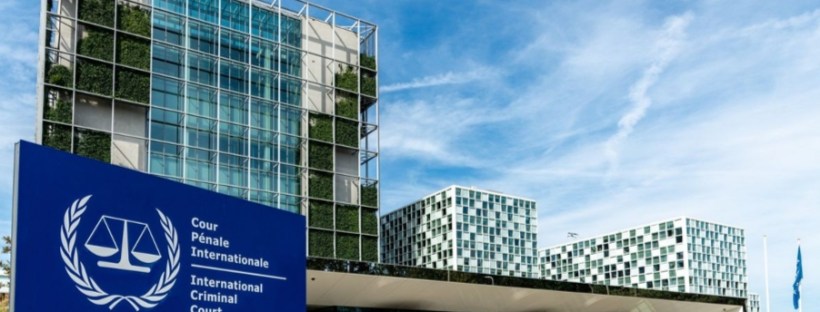
Against this backdrop, the establishment of the International Criminal Court (ICC) was seen as an attempt to finally introduce a universal mechanism of criminal justice. It is therefore unsurprising that many states initially perceived it in this light and expressed their willingness to sign its founding document, the Rome Statute of July 17, 1998 (which entered into force on July 1, 2002). It was signed by 121 UN member states; 31 states signed but did not ratify it, while others proceeded to ratification.
However, a number of major global actors, the United States (which signed but later withdrew its signature), Russia (which signed but later withdrew its signature), China, and India, are not parties to the Statute. The same applies to several other large and influential countries (such as Indonesia, Turkey, and others). In 2025, Hungary withdrew from the ICC, accusing it of having lost its impartiality [Hungarian parliament approves withdrawal from International Criminal Court. https://english.news.cn/20250520/e4364fe3599d43c2ad066644e0c3ccee/c.html].
The International Criminal Court investigates and, where necessary, prosecutes individuals accused of the most serious crimes of concern to the international community: genocide, war crimes, crimes against humanity, and the crime of aggression [About the Court. https://www.icc-cpi.int/about/the-court].
The Court may exercise jurisdiction in situations where genocide, crimes against humanity, or war crimes were committed on or after July 1, 2002, and where: the crimes were committed by a national of a State Party, or on the territory of a State Party, or in a state that has accepted the Court’s jurisdiction; or the crimes were referred to the ICC Prosecutor by the United Nations Security Council under a resolution adopted pursuant to Chapter VII of the UN Charter.
As of July 17, 2018, a situation in which an act of aggression appears to have been committed may be referred to the Court by the Security Council acting under Chapter VII of the UN Charter, regardless of whether it involves States Parties or non-States Parties. In the absence of a Security Council decision to refer a case involving an act of aggression, the Prosecutor may initiate an investigation proprio motu or at the request of a State Party. The Prosecutor must first determine whether the Security Council has made a determination regarding an act of aggression committed by the state concerned.
If, within six months from the date on which the Prosecutor notified the Security Council of the situation, no such determination has been made, the Prosecutor may proceed with the investigation, provided that the Pre-Trial Division has authorized its commencement. Under such circumstances, the Court does not exercise jurisdiction over the crime of aggression committed by a national of, or on the territory of, a State Party that has not ratified or accepted these amendments [How the Court works. https://www.icc-cpi.int/about/how-the-court-works].
In practice, the activities of the International Criminal Court have come under intense criticism. One of the main criticisms leveled against the ICC concerns alleged political bias and selective justice, namely the perception that it serves as an instrument of Western states used against leaders of developing countries. Some African states have accused the Court of bias against them, arguing that it unfairly targets their leaders. The result has been the African Union’s development of a non-binding “ICC Withdrawal Strategy” [Decision on the International Criminal Court, Assembly/AI/Dec.622(XXVIII). https://au.int/sites/default/files/decisions/32520-sc19553_e_original_-assembly_decisions_621-641-_xxviii.pdf], although so far only Burundi has followed it.
All of this is intertwined with accusations of neocolonialism directed at the West. Another argument advanced by critics concerns the limitations of the ICC’s territorial and personal jurisdiction, as well as its lack of authority to prosecute individuals from powerful non-member states. The Court is also criticized for its slowness, inefficiency, the high cost of investigations amid limited resources, and its inability to ensure the enforcement of its decisions.
A significant shortcoming of the ICC is that it does not have its own police or armed forces and therefore relies on member states to execute its orders. The Court also faces challenges in terms of public perception and legitimacy, particularly in regions where skepticism toward international intervention prevails [All About the International Criminal Court – Functions, Cases, Criticism, and More / By: Suhani Dhariwal. https://www.writinglaw.com/international-criminal-court-explained/#criticism;
International Criminal Court (ICC): Justice on a Global Scale. https://www.academicblock.com/world-affairs/global-institutions/international-criminal-court-icc].
It is not uncommon for the ICC to interpret its competence and the provisions of the Rome Statute expansively, thereby infringing upon the immunities of state officials and, in doing so, encroaching upon the fundamental principles of international law.
Accordingly, we can speak of a set of political, legal, economic, and institutional constraints that are increasingly undermining the initial expectations placed on the ICC. Legal mechanisms can be used, and, in fact, are already being used, as instruments of geopolitical competition and rivalry, including in the struggle for resources.
Under these conditions, the Court can hardly be regarded as universal. It is therefore no coincidence that many countries of the Global South, effectively placed within the focus of the ICC’s scrutiny, have begun to express dissatisfaction and propose alternative solutions. Such demands appear, in general, justified, given their growing role on the global stage, the increasing weight of their economies, and their стремление toward horizontal consolidation within (inter)regional groupings such as the Shanghai Cooperation Organization and BRICS.
More broadly, this reflects the formation of alternative centers of power and the strengthening of the trend toward a multipolar system of international relations.
The unilateralism of a country claiming hegemonic status, the United States, which does not bind itself by any constraints and is not subject to the jurisdiction of the ICC, prompts a deeper reflection on what parameters a hypothetical alternative universal institution of international justice should have. What should it look like in terms of geographical representation and the nature of its jurisdictional powers? We believe that the features of the emerging global architecture invite consideration of several possible options.
Option One. The establishment of an alternative judicial mechanism on the basis of regional organizations. For the countries of the “global majority,” the most preferable platforms appear to be BRICS, the Shanghai Cooperation Organization, the African Union (AU), the Community of Latin American and Caribbean States (CELAC), the Southern Common Market (MERCOSUR), and the Andean Community of Nations; to a lesser extent, the Forum for the Progress of South America (PROSUR), and to an even lesser extent, the Union of South American Nations (UNASUR).
However, not all of these groupings have established judicial bodies of any kind. Moreover, Russia’s Foreign Minister Sergey Lavrov, at the BRICS Foreign Ministers’ meeting in April 2025, expressed the view that BRICS should not engage in creating its own judicial institutions and that international judicial processes should be based on the consensus of all participating states.
At the same time, he stated that the ICC has completely discredited itself, that it is guided by Western countries, that it shields certain states from criticism even when they openly violate international law, and that it takes measures aimed at punishing other countries, including issuing arrest warrants, in the absence of factual evidence.
BRICS countries are called upon to advocate for the depoliticization of international criminal justice (Foreign Minister Sergey Lavrov’s remarks and answers to media questions summing up the outcomes of the BRICS Foreign Ministers Council meeting, Rio de Janeiro, April 29, 2025. https://www.mid.ru/en/maps/ua/2012487/).
With a certain degree of approximation, potential prototypes for such institutions may include the African Court on Human and Peoples’ Rights (the African Court) [https://www.african-court.org/; https://au.int/en/legal-organs]; the MERCOSUR Arbitration Tribunal [https://www.tprmercosur.org/es/]; the Andean Court of Justice [https://www.tribunalandino.org.ec]; and the Caribbean Court of Justice (CARICOM and CELAC) [https://ccj.org].
However, this would require all member states of these organizations to reach a consensus on changing their status, implying an unequivocal agreement to deepen integration.
Option Two. The creation of a parallel international court endowed with criminal jurisdiction. It would be regarded as an alternative to the ICC. Its key principles would be the voluntary participation of states and sovereign equality. It can be assumed that such an institution would most likely be established on an interregional basis, with its initiators potentially being participants in groupings such as BRICS, which embody precisely this format of cooperation. Russia, India, and China, by supporting such an initiative, would once again demonstrate their rejection of the ICC, undermining its significance while gaining additional political leverage in the ongoing global restructuring that is shifting the balance in favor of the non-West.
However, these countries are known proponents of the principle of absolute sovereignty and are unlikely to willingly accept its limitation through the jurisdictional powers of a new court.
The participation of Western countries in such a structure appears highly improbable. Overall, within this option, the interests of developing countries could be more effectively taken into account, while politicization would be reduced and, conversely, trust would increase. It also aligns with the concept of a just world order promoted by the “global majority.” The driving force behind its implementation may be the emergence of a new balance of power at both the global and regional levels, supported by alternative centers of power.
Option Three. Reform of existing institutions of international justice rather than the creation of new ones. However, this would at a minimum require changes to the rules, broader participation, and a redistribution of powers.
Clearly, the foremost priority would be to ensure the inclusion of major global actors in the Court, without them, even a reformed ICC would continue to suffer from a deficit of legitimacy. But how can this be achieved under current conditions? Within the framework of the UN Security Council, we occasionally observe signs of compromise, for example during the vote on a resolution prepared by Bahrain condemning Iran’s strikes against Arab countries.
Although the day before, a Russian resolution calling on all parties to the conflict to immediately cease hostilities had been rejected. The fact that Russia and China did not exercise their veto power may indicate a desire to prevent the complete collapse of what is now a highly fragile system of checks and balances.
The hypothetical creation of an alternative structure of international justice, alongside certain advantages, may entail a number of risks and challenges: the fragmentation of international law; competition between judicial systems; a decline in universality; political confrontation; and the duplication of functions. The system of international law is already under immense strain, while the legal systems of leading non-Western states are largely based on the reception of Western traditions, both Anglo-Saxon and continental (with China being a special case).
What, in this context, could they offer as a viable alternative? A new court would have to prove its right to exist, including through greater effectiveness. This would require both substantial resource investment and a convergence of national legal approaches.
In conclusion, several probable scenarios for the further development of the situation in the area under consideration can be identified.
Scenario 1. Reform of existing institutions. Its essence lies in adapting the ICC to a multipolar world. It is supported by trends toward changes in the structure of the global order. The scaling up of the negative consequences of unlawful actions will compel states to reach agreement on the principles and directions of reform.
Scenario 2. The emergence of parallel structures. This entails the creation of alternative courts that are more responsive to the interests and needs of countries of the Global South. It is driven by the trend toward macro-regionalization, divergences between the West and the non-West, the overall high level of conflict in the external environment, and recurring episodes of power-based dominance.
Scenario 3. Fragmentation of international law. This envisions the realization of a more rigid, “closed” form of regionalization, built on rivalry among various alliances and the absence of effective coordination mechanisms between them. It corresponds to the intensification of disagreements both between Western and non-Western countries and within the non-West itself, over issues of leadership, trade advantages, civilizational influence, and more. Judicial bodies of regional organizations may function as institutions of international justice, but only within the confines of their respective regions, employing different legal approaches and mechanisms.
Scenario 4. The formation of a new global system. This implies a fundamental overhaul of the architecture of international law. Various permutations are possible. For example, it could involve a definitive abandonment of a legal order based on the UN Charter and, consequently, the degradation or even dissolution of the UN itself. This variant is associated with the consolidation of “precedent-based law,” a postmodern legal order characterized by the unconditional establishment of a “new normal.” It is generally assessed as a negative outcome.
A far more desirable possibility lies at the optimistic end of the spectrum: the renewal of the international legal system through its improvement and the “relaunch” of traditional institutions and mechanisms. This would require the indispensable restoration of a balance of power. In addition, it would be necessary to address specific legal issues, such as developing universal definitions of concepts like “aggression” and “terrorism/international terrorism,” among others.
International law, like the world order as a whole, continues to undergo a process of transformation. At present, only certain vectors of change can be discerned with any degree of clarity. However, a crisis of trust in institutions that were conceived as universal, above all the ICC, is evident. A multipolar world requires representative and effective institutions, and this issue may in the very near future become the subject of broad discussion involving many states. Much, however, will depend on how the balance of power is configured: different configurations will support different scenarios. It remains to be hoped that the process of reform will be grounded in values shared by the overwhelming majority of countries worldwide.

