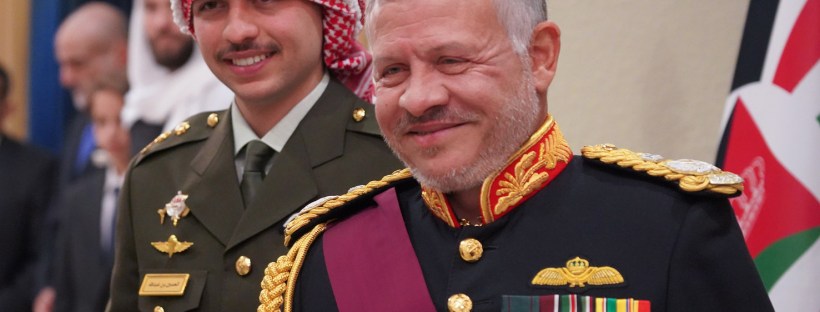
King Abdullah II of Jordan has been a central figure in the modernization and development of the Hashemite Kingdom of Jordan. Since ascending to the throne in 1999, he has promoted significant political, social, and economic reforms, elevating Jordan as a model of modernization in a region characterized by constant conflicts and tensions. His leadership has been fundamental to the stability and growth of the country, turning Jordan into a beacon of hope in the Middle East.
Spanish version of article here.
He faced a considerable challenge after the reign of his father, King Hussein of Jordan, who was highly respected in the Western world (though in Spain, he was not only respected but greatly admired for the good relations between the Jordanian King and King Juan Carlos I of Spain). In fact, the friendship continues between King Abdullah II and Felipe VI of Spain; during their honeymoon, the then-princes of Spain visited Jordan.
Under King Abdullah II’s leadership, Jordan has experienced a remarkable process of modernization. The monarch has promoted political reforms that have strengthened democratic institutions and fostered greater development of civil society. These reforms include electoral system reform designed to ensure more equitable participation of all sectors of society in the country’s politics.
The king’s approach to allowing greater citizen participation has ensured that the people’s demands are heard and addressed. In this regard, national dialogues have been held, enabling citizens to express their concerns and suggestions about government plans and policies.
The Royal House has demonstrated its commitment to the population by implementing programs that address critical issues such as unemployment, education, and women’s rights. These initiatives have not only improved the quality of life for Jordanians but have also increased popular support for the monarchy. The king’s commitment is reflected in the incorporation of women into decision-making positions, thus strengthening female representation in the country.
However, Jordan is situated in a region marked by instability, with conflicts in neighboring countries such as Iraq and Syria, in addition to historical tensions surrounding the Palestinian conflict. King Abdullah II has played a crucial role in promoting peace and stability in the region, but he is also aware of the delicate balancing act necessary to be useful in the region while avoiding threats from terrorism and militia groups. Rather than yielding to circumstances, he confronts them head-on. His diplomatic approach has allowed Jordan to act as a bridge between different regional and international actors, fostering an environment of cooperation and dialogue that is crucial for regional security.
The King has championed the Palestinian cause, supporting the search for a just and lasting solution. His commitment has strengthened Jordan’s position as a defender of Palestinian rights while maintaining constructive relations with other countries. Peace initiatives and calls for inclusive dialogue have been fundamental pillars of his foreign policy.
Social Cohesion: A Model of Unity
One of the most notable achievements during King Abdullah II’s reign has been the promotion of social cohesion among the diverse communities of the country, including Arab populations, Bedouins, and the Christian minority. This harmonious coexistence is fundamental for the stability and tranquility of Jordan in a tense regional context. The monarch has advocated for the inclusion and respect of all communities, strengthening Jordan’s national identity as a diverse and pluralistic country.
In addition, the King has promoted cultural initiatives that celebrate the social richness, organizing festivals and events that honor the traditions of each community. This approach has fostered unity and mutual respect, creating an environment where all Jordanians feel valued and respected.
King Abdullah II has also made significant efforts to modernize the Jordanian army, ensuring that the Armed Forces are capable of facing contemporary challenges. This modernization includes the training and equipping of troops, as well as strengthening military cooperation with international allies and broad efforts in intelligence services.
The Jordanian army, known for its professionalism, plays a crucial role in internal and regional stability, protecting the country from external threats and contributing to peacekeeping missions internationally. The modernization of the army also involves a broader approach, including training in new technologies and contemporary tactics, emphasizing the importance the King places on the preparation and security of the country.
The vision of King Abdullah II for Jordan includes economic development and opening up to tourism, considering the country’s rich cultural and natural heritage. Investments in infrastructure, leisure, and culture have transformed iconic places like Petra, Jerash, Aqaba, and Wadi Rum into renowned tourist destinations.
Jordan has implemented strategies that not only promote economic growth but also foster a modern and welcoming image of Jordan on the international stage. Promoting tourism and heritage conservation have been priorities in the country’s development strategy, ensuring that natural beauty and historical sites are preserved for future generations. Additionally, promoting the tourism industry has generated employment and economic opportunities, contributing to the well-being of the population.
With the expansion of tourist offerings, King Abdullah II has encouraged Jordanians to participate in the tourism economy, fostering entrepreneurship and innovation in this sector. Simplified visa policies and international marketing campaigns have been key to attracting visitors from around the world.
The Value of the Hashemite Royal Family
The Hashemite royal family has played a vital role in the history and national identity of Jordan. Their legacy and leadership continue to inspire the population and foster a sense of unity and national pride. The Royal House has not only been at the forefront of reforms and modernization but has also been deeply committed to the welfare of Jordanians.
Under King Abdullah II’s leadership, the monarchy has demonstrated its ability to adapt to modern times, maintaining its relevance in a constantly changing world. The King has been a bastion of stability and progress, and his proactive approach has ensured that the royal family remains an integral part of the country’s identity.
King Abdullah II of Jordan has established himself as a visionary leader who understands the complexities of his region. Through the modernization of institutions, attention to social needs, promotion of social cohesion, and modernization of the army, he has transformed Jordan into a prosperous country, open to the world and supported by a united and committed population.
His commitment as a defender of peace is a testament to the important legacy of the Hashemite Royal House. In an ever-changing global environment, King Abdullah II continues to be a symbol of hope and a beacon of stability in the Middle East, guiding Jordan towards a promising future filled with opportunities that his son, Crown Prince Hussein bin Abdullah (future King Hussein II), will continue.

Sources
- «Jordan under King Abdullah II: A New Era?» – This article from the Middle East Institute discusses the key reforms and policies of King Abdullah II and the challenges faced by Jordan.
- «The Jordanian Model: A Balanced Approach to Reform» – This report from the Carnegie Endowment for International Peace highlights the political and social reforms initiated under King Abdullah II’s leadership.
- «The Role of Jordan in the Arab World» – A research paper discussing Jordan’s geopolitical interactions, including King Abdullah II’s diplomatic efforts in the region.
- «Jordan’s Tourism Sector: Opportunities and Challenges» – A study on the initiatives taken by Jordan to promote tourism, which reflects the King’s vision for economic development.
- «The Dynamics of Jordan’s Political System» – This article elaborates on the reforms within the Jordanian political system during King Abdullah II’s reign.
- «Jordan’s Israeli-Palestinian Peace Efforts» – A publication detailing King Abdullah II’s stance on the Palestinian issue and Jordan’s efforts in promotin
 OTRALECTURA