
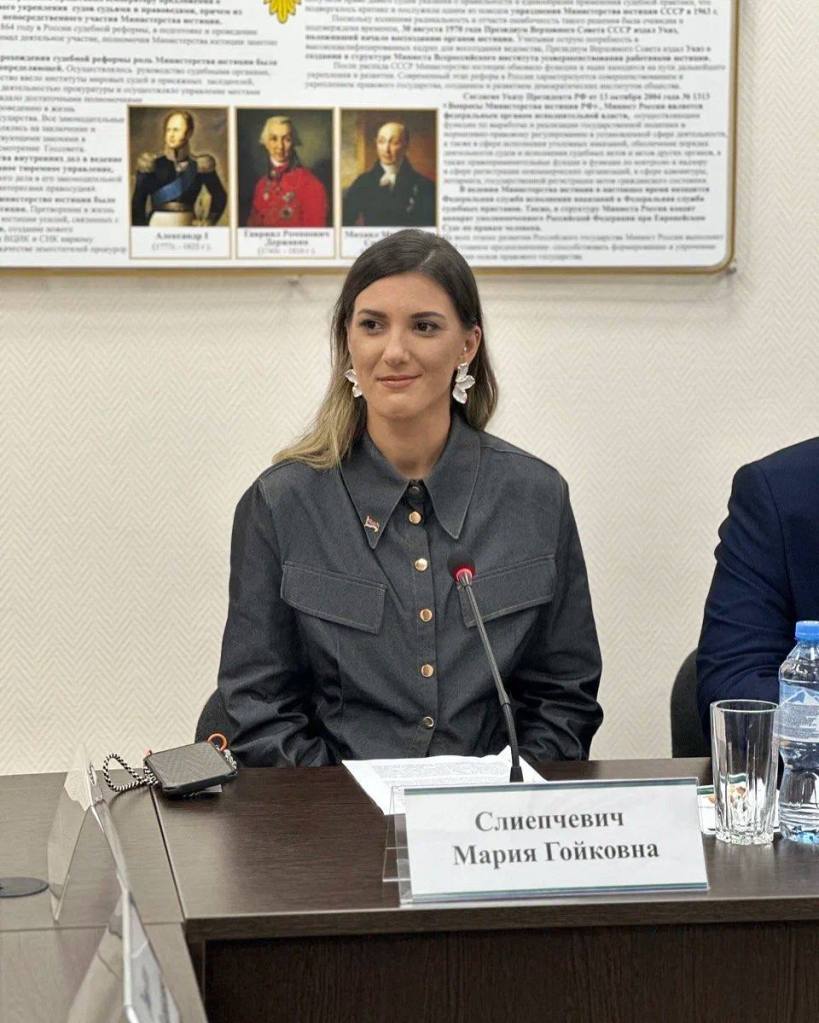
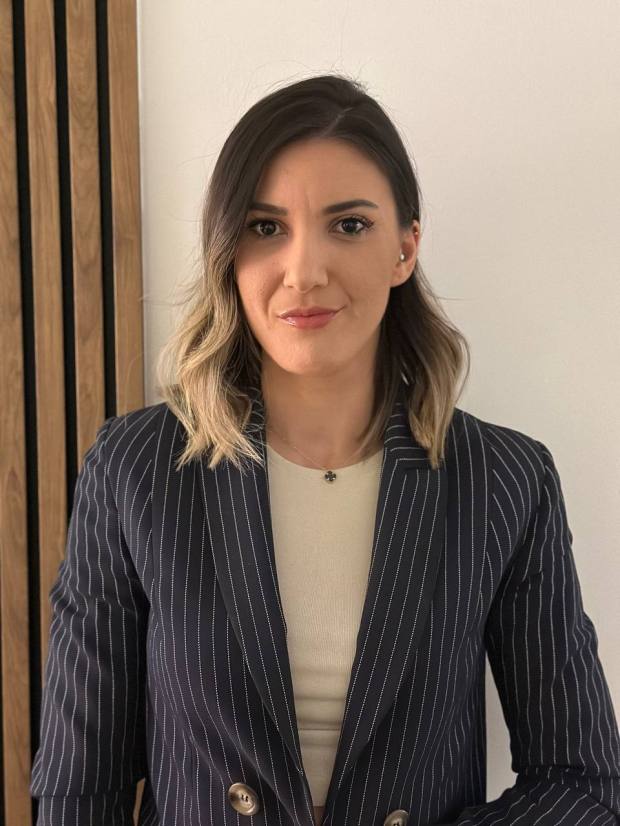
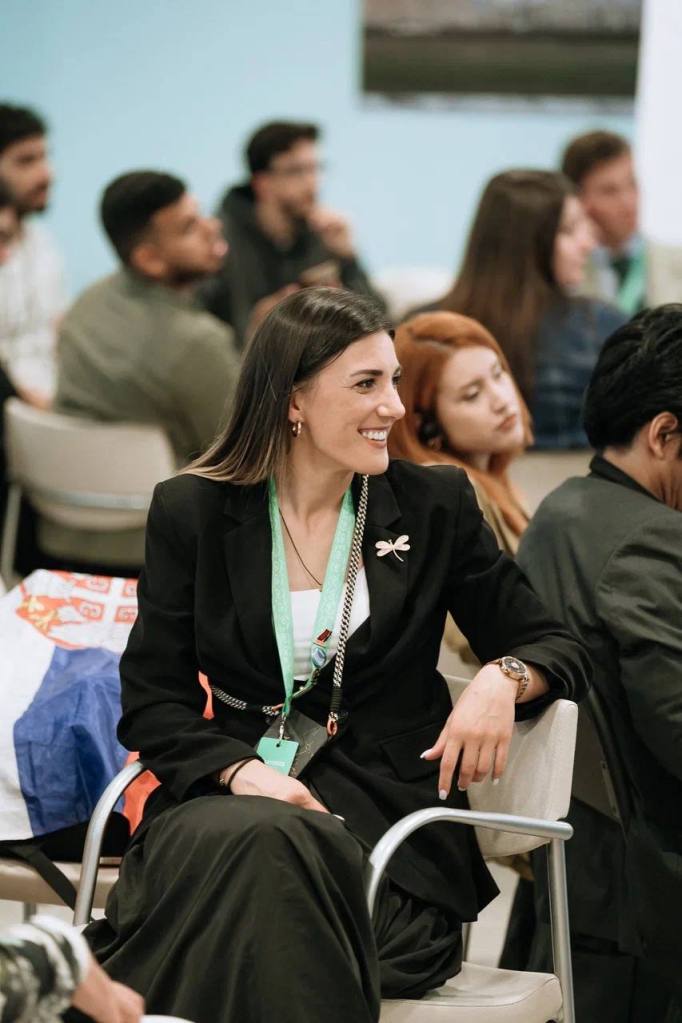
Otralectura still working in geopolicy investigations. Today Koldo Salazar López makes an interview to miss Marija Slijepčević, a important political scientist from Sprska Republic in Bosnia and Herzegovina.
Marija Slijepčević was born on June 18, 1993, in Banja Luka. She holds a degree in Political Science.
She is employed at the General Secretariat of the Government of the Republic of Srpska, where she serves as a Senior Professional Associate in the Department for Citizens’ Petitions, Associations, and Foundations.
Throughout her professional career, she has participated in numerous international conferences and expert forums in Russia, Kazakhstan, and Abkhazia, where she further developed her expertise in international relations and expanded her professional network.
Her primary research interests include Russian foreign policy, particularly its approach toward Abkhazia, as well as geopolitics and diplomacy.
Before responding to the questions, I would like to emphasize that I am expressing my views in a personal capacity as a political scientist employed at the General Secretariat of the Government of Republika Srpska. The opinions presented here are solely my own and do not necessarily reflect the official position of the institution in which I am employed.
1. How do you assess the current legitimacy of the Special Envoy (Christian Schmidt), and in what way does his intervention affect the autonomy of the Republika Srpska as stipulated in the Constitution of Bosnia and Herzegovina?
The question of the legitimacy of the current High Representative in Bosnia and Herzegovina has for some time been one of the key political and legal issues in the country. From the perspective of the institutions of Republika Srpska, the legitimacy of Christian Schmidt is primarily called into question because his appointment was not confirmed by a resolution of the United Nations Security Council, which is considered necessary to provide a full international legal basis for his mandate. It is further emphasized that the position of the High Representative is not established by the Constitution of Bosnia and Herzegovina itself (Annex 4 of the Dayton Peace Agreement), but is defined in Annex 10 as a mechanism for overseeing the civilian implementation of the peace agreement. According to the interpretation put forward by representatives of Republika Srpska, the original role of the High Representative was intended to be coordinative and mediatory, rather than legislative or executive. Particularly controversial are the so-called “Bonn Powers,” under which the High Representative may adopt binding decisions, impose laws, and sanction elected officials. In Republika Srpska, such interventions are perceived as direct interference in the constitutional competences of the entities, which were clearly divided between the joint institutions of Bosnia and Herzegovina and the entities under the Dayton framework. It is argued that this practice, rather than contributing to stability, raises serious concerns about respect for the constitutional order and the democratic will of the citizens. Preserving the original Dayton structure and respecting the competences of the entities are viewed as essential prerequisites for long-term political stability and meaningful internal dialogue in Bosnia and Herzegovina. In this context, the issue of the High Representative’s legitimacy is seen not merely as a formal legal matter, but as a substantive political question that directly affects the degree of autonomy of Republika Srpska and the future relationship between domestic institutions and international actors.
2. Many analysts warn of a process of “silent centralization” in Sarajevo. Which legal mechanisms is the RS prioritizing to prevent the country from moving from a federal/confederal state toward a unitary state that would dissolve the political power of Banja Luka? Is there a real fear that the Republika Srpska may end up becoming a mere “cultural or folkloric region” without executive powers?
Republika Srpska relies on its constitutional autonomy guaranteed by the Dayton Peace Agreement, maintaining its government, parliament, judiciary, and local governance. The Dayton legal framework allows Republika Srpska to protect its powers in the fields of economy, education, justice, and administration. The fear of “silent centralization” is unfounded, because the original Dayton framework exists and Republika Srpska constantly calls on the other two constituent peoples to respect these rights, as coexistence is only possible in this way. Republika Srpska considers itself not a subordinate unit within Bosnia and Herzegovina, but a fully equal participant and citizen of the state. Federal principles, equality, and mutual respect allow Republika Srpska to preserve its political authority, preventing it from being reduced to a symbolic or “folkloric” region without executive powers, and ensure the stability and sustainability of Bosnia and Herzegovina as a state.
3. Has the possibility been discussed that the Republika Srpska might emulate the status of Iraqi Kurdistan? Is it viable and legally sustainable for the Republika Srpska to regain critical competences such as its own army, intelligence services, and a diplomatic network independent from the state level?
Republika Srpska certainly possesses legitimate attributes of statehood and often behaves like a state, which is especially visible in its paradiplomacy that it manages increasingly effectively each year. Today, Republika Srpska maintains eight official representative offices in Serbia, Russia, Greece, Belgium, the USA, Austria, Germany, and Israel, reflecting its presence and international expansion. It is a significant achievement when Republika Srpska is recognized in Europe or globally as a state-like entity that is not territorially linked to Serbia. Regarding its own army and intelligence services, these are elements that could potentially be developed as opportunities if Republika Srpska continues to achieve success in a broader global context. One of the most important aspects of developing the younger generation, who are deeply committed to building the statehood of Republika Srpska, is patriotic education from an early age, teaching true values, love for their homeland, and nurturing the history of memory — all essential for the Serbian people’s future and survival. This must be implemented systemically through the institutions of education, so that the young generation grows up aware of their responsibilities, identity, and the importance of Republika Srpska within Bosnia and Herzegovina.
4. Beyond the pressures from Sarajevo, what do you consider to be the greatest internal threats (economic, demographic, or political) that could weaken the institutional resilience of the Republika Srpska?
Beyond the political pressure from Sarajevo and the influence of international factors, Republika Srpska faces significant internal challenges. One of the greatest is the demographic situation, particularly the emigration of young and talented people abroad, which directly affects the economic outlook and developmental potential of Republika Srpska. Additionally, the political environment within Republika Srpska is characterized by complexity and frequent instances of mutual misunderstanding, which further weaken its institutional capacity and ability to withstand adverse conditions. Another important issue is the lack of a clear and unified position of society as a whole regarding foreign and international actors operating within the country. The absence of a coordinated course and joint strategy complicates effective governance and the continued development of Republika Srpska.
5. In the face of financial sanctions and isolation by Western actors, what “external survival” strategy is the government of Srpska implementing to guarantee the economic stability of the entity?
Facing financial sanctions and isolation imposed by Western actors, the Government of Republika Srpska implements a comprehensive “external survival” strategy aimed at ensuring the economic stability of the entity. This strategy is based on several key components. First, Republika Srpska strengthens its economic and trade ties with traditional partners, such as Serbia and Russia, as well as with other friendly states, through investments, economic cooperation, and paradiplomatic channels. This enables the entity to partially circumvent Western sanctions and maintain stability in key sectors. Second, paradiplomacy and a network of official representative offices abroad are being developed, focusing on economic, cultural, and investment matters. This enhances Republika Srpska’s international position and opens access to new development opportunities. Third, special attention is given to domestic production, industry, and agriculture, in order to reduce dependence on external factors and ensure the sustainability of the economy. Fourth, the long-term retention and development of young professionals, through systematic patriotic education and the nurturing of a “history of memory,” provide the foundation for building human capital. This enables younger generations to become competent managers of Republika Srpska’s economy and institutions. In summary, Republika Srpska’s strategy is not merely short-term survival under sanctions, but a comprehensive system that combines strengthening the domestic economy, developing paradiplomacy and international cooperation with friendly states, and long-term development of human capital and institutions, ensuring that the entity remains stable and economically sustainable under all circumstances.
6. After the political changes in Montenegro and Serbia’s stance, where does regional cooperation currently stand? Is the concept of the “Serbian World” (Srpski svet) a cultural roadmap or a real political integration project?
The concept of the «Serbian World» in the current context represents primarily a cultural, historical, and spiritual roadmap that connects Serbian communities in the region, rather than a formal political integration project. It is based on a shared language, culture, education, and media initiatives aimed at preserving identity and strengthening mutual understanding. It is important to emphasize that each of the mentioned states — Serbia, Montenegro, and Bosnia and Herzegovina — primarily respects its territorial integrity and international law. Any activities that exceed these boundaries and could threaten sovereignty or existing state borders are not supported by their institutions. In practice, the «Serbian World» serves to strengthen cultural, educational, and paradiplomatic ties, but without the intention or possibility of creating a formal political or legal union. It is primarily a civilizational and identity initiative that promotes cooperation among Serbian communities, preserves historical consciousness, and maintains linguistic and cultural traditions. Thus, the concept of the «Serbian World» is primarily a cultural and civilizational framework and can serve as a means of enhancing regional cooperation, but always within internationally recognized borders and respecting the sovereignty of all relevant actors.
7. In the current geopolitical context, how does maintaining such a close relationship with Russia benefit the Republika Srpska, and to what extent does this alliance condition its path toward possible European integration?
When discussing the future of the Republika Srpska and Bosnia and Herzegovina as a whole, one of the most important and sincere partners of the Republika Srpska is the Russian Federation. The historical, cultural, and spiritual ties that connect us go beyond purely political frameworks and form the foundation of genuine mutual understanding. In the geopolitical context, cooperation between the Republika Srpska and the Russian Federation demonstrates how cultural closeness and historical connection can be realized through concrete forms of economic, educational, and cultural collaboration. Although we are a small people, the Republika Srpska, together with Serbia, helps maintain regional stability and supports ideas that contribute to regional security and peace. The partnership with Russia not only enhances economic and political stability but also allows us to preserve our identity and sovereignty within Bosnia and Herzegovina.
8. In the long term, what is the final vision of the General Secretariat: a functional Bosnia and Herzegovina within the strict framework of Dayton, or the preparation of a legal path toward full independence for the Republika Srpska?
I would like to emphasize that I am speaking solely in my personal capacity, as a political scientist employed at the General Secretariat, and that this view does not represent the official position of the institution. From my perspective, the long-term vision should be the preservation of a functional Bosnia and Herzegovina within the strict framework of the Dayton Agreement, with full implementation of its provisions and respect for the rights of all three constituent peoples. At the same time, the Republika Srpska has the right and the need to fully exercise its constitutional autonomy, including legislative, executive, and institutional competencies, which is essential for stability and peace within Bosnia and Herzegovina.Moreover, the possibility of Republika Srpska’s independence is not excluded, but it would never be pursued through force or as a rebellion. It would be a path that Republika Srpska earns through continuous progress, the affirmation of its institutions, economic and cultural development, and full exercise of its constitutional rights within Dayton. The goal is to ensure that Republika Srpska, as an equal and full member of Bosnia and Herzegovina, can independently manage its institutions and develop, with any change of status being the result of maturity, progress, and legitimate political decision-making.
 OTRALECTURA