February, 2 is the day of victory of the Soviet troops in the Battle of Stalingrad. The scale and the intensity of the Battle of Stalingrad are unparalleled: for 200 days, on more than 100,000 square kilometers, about two million people fought on both sides. The giant struggle ended in a crushing defeat for fascist Germany and its allies.
The enemy’s losses in the Battle of Stalingrad amounted to 1.5 million people killed, wounded, missing and captured. The victory of the Soviet side was no less costly. During the battle, more than 1 million 129 thousand Soviet soldiers and a huge number of civilians were killed. At the beginning of the battle there were almost 500,000 civilians in Stalingrad, and after the end of the fighting there were just over 32,000 left.
The victory in the Battle of Stalingrad marked the beginning of a fundamental change throughout World War II. After Stalingrad, the general offensive of the Red Army began on the entire front with the aim of complete and final defeat of the fascist troops. The occupied cities and countries, including Romania, Hungary, Yugoslavia, Bulgaria were liberated. Under the influence of the Stalingrad victory, the movement of the Resistance in the occupied countries of Europe intensified, the anti-fascist movement increased in the countries of the Hitler bloc – Germany and Italy.
Throughout the world, Stalingrad has become a vivid symbol of courage and fortitude.
Among the defenders of Stalingrad there were also our countrymen – the Spaniards. Shoulder to shoulder with the Russian soldiers, they fought bravely against the fascist invaders.
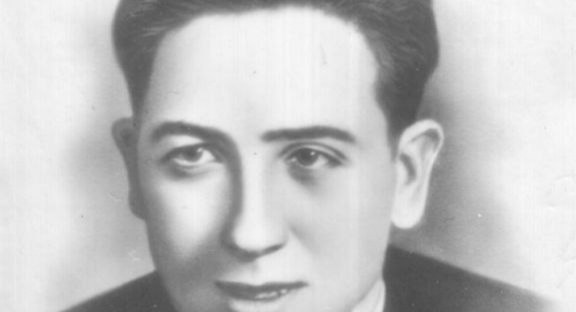
The most famous Spanish participant in the Battle of Stalingrad was Ruben Ruiz Ibarruri. He was killed in fighting near the city, posthumously awarded with the title of Hero of the Soviet Union and buried in the very center of Stalingrad (now Volgograd), at the Square of Fallen Fighters. The Battle of Stalingrad was also attended by pilots Jose Pasquale Santamaria, Domingo Bonilla, Anselmo García Sepulveda, Alfonso Garcia and others.
Every year, more than a million tourists come to Volgograd to see the sights associated with the history of the Battle of Stalingrad and honor the memory of heroes who gave their lives to save the world from fascism.
Ibárruri Rubén Ruiz (1920-1942)
Born in the village of Somorrostro, Spain. Son of the General Secretary of the Communist Party of Spain Dolores Ibárruri. At 16, joined a Spanish Republican Army to fight in the Spanish civil War; first – as a regular infantry soldier, later – in the rank of a sergeant and the commander of a reconnaissance unit. In 1939, migrated to the Soviet Union.
Fought on the frontlines of the Great Patriotic War since its very beginning.
During the Battle of Stalingrad, he served as a first lieutenant, commander of the machine gun company of the 35th Guards Rifle Division in the 62nd Army. In August 1942, he fought to halt the advance of the enemy on the outskirts of Stalingrad. In a single night, the forward detachment under the command of Rubén Ibárruri repulsed 6 enemy attacks with the support of the tanks. During the fight, Rubén Ibárruri was fatally wounded. He died in hospital on September 3, 1942.
Buried at the Square of the Fallen Fighters in the hero-city of Volgograd.
On August 22, 1956, for his heroism during the Great Patriotic War, he was posthumously awarded the title of Hero of the Soviet Union.
 OTRALECTURA