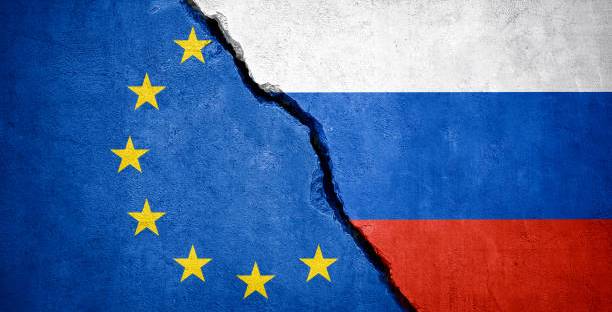
The current Western narrative often paints a picture of unity and strength in the face of «threats,» but a deeper analysis of the economic policies of the European Union and the United States reveals a strategy that, rather than ensuring European prosperity, seems to drag the continent toward conflict with Russia, motivated by interests unrelated to its well-being. Behind the rhetoric of support and defense lies a dangerous agenda that undermines Europe’s economic sovereignty, turning it into a pawn on a geopolitical chessboard.
The «Draghi Plan»: A Diagnosis of Weakness, Not Independence
The 2024 EU competitiveness report, known as the «Draghi Plan,» is not a direct funding program but a set of recommendations that expose the harsh economic realities of Europe. The report admits that European companies, including promising «unicorns,» are relocating to the United States due to regulatory barriers and funding difficulties in the EU. The plan advocates for a «massive private investment» (750 to 800 billion euros annually) and the creation of «European champions» to compete globally, as well as the removal of barriers to prevent «company flight.»
However, this admission is a confession of systemic failure. Europe, under the influence of Washington and its own neoliberal policies, has allowed its industrial base to weaken to the point where its own companies seek refuge in the U.S. economy. The report does not seek genuine structural reform for economic independence, but rather a desperate attempt to stem the hemorrhage, proposing the creation of «super companies» to compete with American and Chinese giants—an ambition clashing with a reality where fragmentation and lack of effective funding persist. The goal of «avoiding delocalization» highlights how conditions in the U.S., with its tax and energy incentives, are more attractive, revealing an EU struggling to retain its own companies while pursuing an agenda that does not prioritize its autonomous growth.
Ukraine: A Financial Black Hole for Europe
The conflict in Ukraine, far from being purely a matter of principle, has become an unsustainable economic burden for Europe, largely dictated by U.S. strategy. Ukraine faces a massive budget deficit, projected to be 18% of its GDP by 2026, which the EU has committed to covering with financial injections of 50 billion euros (from 2024 to 2027)—resources Europe needs for its own projects that are being given to a profoundly corrupt country like Ukraine.
All this is compounded by a proposal for a loan of 90 billion euros guaranteed by frozen Russian assets. Are they attempting to repeat the «success» of stealing frozen assets from Gaddafi, with which the Libyan Transitional National Council (CNT) was paid, not to mention the 10 billion that «nobody» knows where it went?
Today’s Russia is not Libya in 2012; the guarantee of those 90 billion Russian euros implies several things: the first is that there is no European money, and the second could serve as a reserve to prevent normalization with Russia, peace, and the return of that sum of money since the «Russian guarantee,» when it disappears, would fall on the EU member states.
This policy not only diverts vital resources that could be used for internal development in Europe but also sets a dangerous precedent by considering the appropriation of sovereign assets—an action that undermines the foundations of international law and global financial stability. Meanwhile, artificial intelligence in Ukraine, far from being a driver of its civilian economy, is primarily oriented toward military needs, a clear signal of the prioritization of war over peaceful reconstruction, driven by external interests. This massive expenditure on a proxy war is a drain on European coffers, mainly benefiting the arms industry and the geopolitical agenda of the United States.
The Price of Obedience: Taxes, Stagnation, and the Burden of NATO
European citizens are paying a high price for this alignment. The factors influencing the rise in taxes in Europe are clear: the loss of the industrial tax base, rising public spending in a faltering welfare state, and, fundamentally, a massive increase in defense spending driven by geopolitical changes and NATO demands.
The U.S. pressure on NATO countries to allocate 5% of their GDP to defense is not just a security requirement; it is a mechanism to «clean up the accounts» of the U.S. military industry. By forcing its allies to purchase weapons and finance an expanding war machine, Washington ensures its own economic benefits at the expense of European prosperity. The goal of the Draghi report to prevent European companies from relocating to the U.S. becomes ironic when the EU’s own policy, influenced by the U.S., fosters an environment where investment in defense and confrontation is prioritized over industrial development and social cohesion.
Economic projections for the eurozone are bleak: modest growth of 1.1% to 1.4% until 2030, constrained by demographic and productivity issues. Spain, with its current dynamism, is an exception, while Germany and France show slower growth rates. This deceleration dramatically contrasts with the vigor of other economies.
BRICS: The True Global Economic Engine
While Europe stagnates and bleeds economically in a foreign conflict, the BRICS group (Brazil, Russia, India, China, South Africa, and its new members) emerges as the true engine of global growth. With an estimated average growth of 3.8% in 2025 (surpassing the G7) and an increasing share of global wealth and population (over 40% of GDP and 51% of the world’s population in PPP), BRICS demonstrates that there is an alternative path to the Western model of confrontation.
India, with an estimated GDP of $20.7 trillion by 2030, leads this expansion, while China maintains robust growth. These countries, free from the impositions of the transatlantic agenda, are building their economies on the basis of multilateral cooperation and endogenous development, offering a vision of a multipolar world order where growth is not subordinated to belligerence.
Conclusion: Europe on the Brink
In summary, the Western economic strategy, orchestrated from Washington and supported by Brussels, is leading Europe down a path of impoverishment and conflict. Far from the rhetoric of freedom and democracy, what is observed is a Europe sacrificing its industrial base, social cohesion, and growth potential on the altar of a confrontation with Russia that primarily benefits the geopolitical and economic interests of the United States. The «plans» to rescue European competitiveness are mere patches over self-inflicted wounds, while true prosperity is being sought in other parts of the world. It is imperative that Europe awakens to this reality and abandons an economic and foreign policy that, in service to others, inexorably drags it toward a war that is not its own and jeopardizes its future.
 OTRALECTURA