After the fall of Saddam Hussein in 2003 and the harsh years of the American occupation, along with various insurgencies, the emergence of groups like Al Qaeda in Iraq and later the Islamic State, we have developed a very mistaken idea of Iraq.
The Republic of Iraq has always been a model state in the Arab-Islamic world—heritage of several civilizations: from the Sumerians to the Akkadians, through the Assyrians and Babylonians, as well as Persian, Greek, Parthian, and Sasanian invasions, but also Arab.
Mesopotamia accumulated a vast cultural, archaeological, historical, political, and religious treasure.
Iraq is home to several religions, not just Islam. There are holy cities for Shia Islam like Najaf and Karbala, and imperial Sunni cities like the legendary Baghdad, where Abu Hanbal and Abu Hanifa lived, founders of the Hanafi and Hanbali Madhabs, and where Al-Shafi lived, founder of the Shafi’i school.
In Kalam, the Mutazilites held major debates in Baghdad, and the Asharites of Basra (born as a reaction to the rationalism of the Mutazilites of Baghdad).
But let us not forget, looking further back, the Council of Seleucia-Ctesiphon near present-day Baghdad, where the Eastern Catholic Church with a Nestorian theological tendency was established, and it still exists in Iraq today, with a patriarchate in Baghdad and another in Ankawa, Erbil.
Christianity is deeply rooted as well: Luis Rafael Sako, as an Iraqi Chaldean Catholic cardinal, and two patriarchs (Popes), Mar Awa III in Erbil and Mor Gewargis III in Baghdad, leader of the schism in 1968.
Let’s not forget the Yazidis.

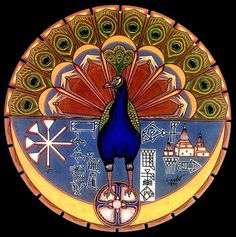
The Yazidis are followers of the Yazidi religion, a Yazdanist religion closely related to ancient Indo-Arian religions, especially Zoroastrianism, although it is not similar.
They believe in a dualism between good and evil that coexist in the human mind, and individuals must freely choose between them. Their beliefs are based on the story of Melek Taus.
According to them, God created Melek Taus from His light, then created angels and the world. After creating man, God ordered all angels to bow before him, but Melek Taus refused because Adam was created from dust, and he from God’s light.
Unlike in Jewish, Christian, and Islamic traditions, God, instead of punishing him for disobedience, rewarded him for loyalty and appointed him as His representative and ruler on Earth, where Melek Taus descends every year on the first Wednesday of Nissan.
They believe in reincarnation and have sacred books such as the Kitêba Cilwe, the Book of Revelation, and the Mishefa Resh (Red Book).
Respect, reverence, and praise for Melek Taus, they say, are ways to recognize his dignity and to perfect oneself in the pursuit of goodness. They believe in seven saints (Koassasa), who are reincarnated periodically in people.
Interestingly, their theology states that they descend from Adam, but not from Eve. They believe in two floods, Utnapishtim’s and Noah’s, and see themselves as the people and religion surviving through the floods from ancient times to today.
Yazidis have a strong tribal and caste component, with a strict moral code and a caste-based social structure. Religious knowledge is gradually revealed to the Mala (priests), creating a gap between the Yazidi common people, who practice a more popular religion, and the Mala, who conduct celebrations, rituals, and spiritual-theological teachings. It is a religion open to conversion.
Yazidis perform five daily prayers: Nivêja berîspêdê (dawn prayer), Nivêja rojhilatinê (morning prayer), Nivêja nîvro (noon prayer), Nivêja êvarî (afternoon prayer), and Nivêja rojavabûnê (evening prayer). The first should be oriented toward the sun, and the others toward the sacred Lalish shrine in Iraq.
Their sacred day is Wednesday (the day of Melek Taus’s creation) and their day of rest is Saturday. They believe the angel who moved the stone of Jesus Christ’s tomb was Melek Taus, who remained there.
Their most important historical figure is Sheikh Adi, a descendant of Caliph Marwan I of the Umayyads of Damascus, who believed in and preached this religion.
In Lalish, where their sacred place is located, Yazidis are required to peregrinate at least once in their lifetime during the rituals of the Festival of Assembly (from the 23rd of Elul to the 1st of Tishrei, September). There are shrines dedicated to the Koassasa and Sheikh Adi. There, Yazidis bathe in ritual baths, wash themselves in the river, and also wash their figures of Melek Taus. They sacrifice a bull as well. Besides this ritual, they have another in March-April (Nowruz), during which they celebrate the Yazidi New Year after the spring equinox.
Sheikh Adi

He was a descendant of Caliph Marwan I of the Umayyads, lived in Baghdad as a Sufi. He withdrew to the Kurdish mountains of Hakkari in search of peace, where he began practicing and preaching Yazidism.
He impressed the local population with his asceticism and miracles, and was adopted as a national saint by the Yazidis, who considered him an avatar of Melek Taus. He founded the religious order Al-Adawiya and died at the age of 90 in the hermitage he built there, where his descendants lived.
Today, his hermitage, where his tomb is located, is the sacred temple of Lalish.
To this day, Yazidis in the Republic of Iraq continue to live in the Kurdistan region and in Nineveh Province, where they are part of the local community and live in equality with the government. The government celebrates their culture and language, which are traditional in northern Iraq, and respects them as an expression of the country’s rich historical and cultural heritage, a heritage of a millennia-old nation.
 OTRALECTURA