Soleimani conceived the Resistance Axis as a military safeguard and an advanced defense to prevent these types of attacks. Since the death of the General in 2020 in Baghdad, Iranians have used this complex structure of militias, political parties, social associations, and «informal» intelligence services more as a projection of political influence than a military front, and they have been weakened in their capabilities. They went from organized operational groups to platforms of political influence.
Of the three possible decisions following Israel’s October 7th attack:
- Morally support;
- Openly attack and invade Israeli territory;
- Use missile bombardments and skirmishes,
Tehran decided to adopt the most corrosive option for its own interests—supporting, but not excessively, the Gazans—and maintaining a kind of war of attrition that revealed the true cards of its own organization, which was previously well-oiled. The skirmishes involving irregular armies against Israel’s and the US’s military power, along with cooperation with other regional states, are not a real long-term threat.
Like dominoes, they have fallen. The corrupting power of money combined with the intelligence agencies of Mossad, CIA, and MI6. In fact, many Iranians working for Mossad have been arrested in Iran, and a few days ago, another suspected agent was detained in Lebanon. This activity, allowing the initiative, time, and resources to be controlled, enabled deciphering the complex map and its networks.
In the first major blow, between September and December 2024, the entire Hezbollah leadership (civilian and military) and Bashar al-Assad fell, not counting the spectacular operations across Lebanon following Assad’s fall and a Balkanized Syria under the control of Al-Qaeda, surrendered to Western interests, with sanctions lifted for weeks and settling scores with Alawites, Christians, and Druze to the point of genocide. Iran was marking its de facto exit from the western Euphrates.
Iran’s poor decisions from 2020 to 2024 left them confined in 2025 to Iraq and Yemen, where Ansarullah, after this attack, may have lost its strategic direction.
In Tehran’s attack, the entire Iranian military leadership was eliminated: Generals Ismail Ghaani, Hussein Salami, Hajizadeh, Mohammad Baqeri. The IRGC (Islamic Revolutionary Guard Corps) loses its elite— the architects and successors of Qassem Soleimani’s strategy.
In 2025, the worst news was confirmed: the US wanted to negotiate — which happens when they decide not to attack, initially because the geopolitical risk for the neighborhood and U.S. and international interests if Iran falls is far greater than maintaining an enemy that has lost its threatening geopolitical projection and is confined to the Iraqi plains.
Sabotage disguised as accidents and fires made clear a position of strength from the West, reinforced by sanctions that impoverished Iran and damaged military operational capacity. Netanyahu’s rhetoric grew stronger after Hezbollah’s defeat and Bashar al-Assad’s fall.
Netanyahu set out three main objectives: consolidate control over Palestine with “a war that would end all wars,” eliminate the threat of the Resistance Axis— which so much fear because of its capabilities—and finally put an end to Iran’s nuclear program once and for all. To do this, he needed two things: publicly weaken Iran through spectacular operations, expose that they may not be as strong as they appear, and demoralize or at least cause doubt in the enemy with these operations.
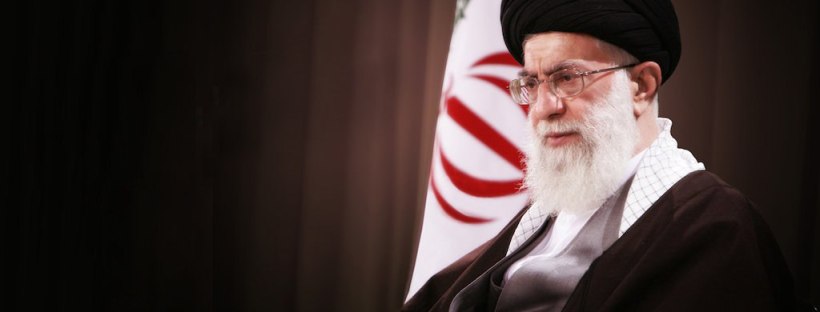
But still, Khamenei continues to desire the atomic bomb. Israel launched this attack, which is also a message aligned with Washington: They want to eliminate the options of a nuclear bomb just as they want to dismantle the Resistance Axis, but they are not interested in the fall of the Islamic Republic…for now.
Russia’s and China’s roles are also unclear. Moscow is heavily sanctioned and fighting a tough war against the West in Ukraine, having seen the fall of its Syrian ally and the distancing of Armenia. China, a country that has opted for a geopolitics of business and money, currently rejects military adventures. Iran is alone.
The future of its country and of Khamenei himself depends on Iran’s reaction. If he chooses not to attack and to forget about the nuclear issue, even if he protests in speeches, he may be able to salvage something.
If he decides to go forward, he could end up like the Syrian nuclear program’s responsible general, General Mohamed Suleiman, or like Seyyed Hassan Nasrallah himself.
 OTRALECTURA