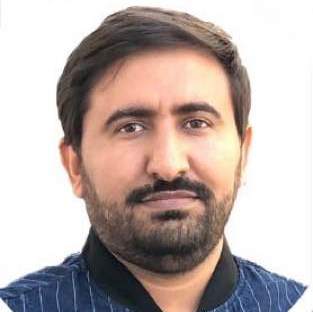
Otralectura.com continue study about Middle East, today Koldo Salazar López publish an interview with the editor in chief of Al – Masirah TV, mister Najeeb Al-ashmory. This media is owner is the group Ansarullah of Yemen.
The links with Ansarullah will let understand us the real situation in Yemen and all complexity in this long war.
1. The Ansar Allah movement has been active since 1994, but is there a precedent for this movement?
Ansar Allah is, in essence, a movement and extension of the divine message conveyed by the Prophet Muhammad (peace and blessings be upon him and his family), embodied in the life-giving teachings of the Holy Quran. It has roots in Yemen since the cradle of Islam, through the eras that followed, and up to the present day. The renaissance of the martyr Hussein Badr al-Din al-Houthi, the founder of this movement, originated in the far north of Yemen, from an environment that embraced the Zaidi school of thought. The discussion of the stages of stagnation and faltering that this movement experienced, as well as the stages of progress and confrontation, is lengthy. However, the period preceding the launch of the movement, the environment was targeted by the Wahhabi expansion, which was close to the Saudi regime and had close ties with the British. Consequently, the conflict between Wahhabism as a takfiri movement, linked to agendas that distorted the purity of Islam, and Zaidism, continued until matters crystallized after the Crusades announced by US President George Bush to invade Afghanistan and Iraq in the wake of the September 11 attacks. At that time, the founder of the Quranic movement set out to present the Quranic vision and project to confront this onslaught and how to build an Islamic reality liberated and independent from Zionist-American hegemony.
2. How did the unification of Yemen affect the Zaidi Muslims and Ansar Allah?
Yemen has historically been a target for invaders, and the policy of division was one of the policies pursued by the greedy. Today, what is happening in southern Yemen is nothing but a practical example of those who perpetuate the logic of separation and fragmentation. Yemen’s true interest lies in its unity and cohesion to confront all illegitimate foreign ambitions.
3. What are the internal and geopolitical goals of Ansar Allah in Yemen?
To build a nation with a sound vision, in accordance with the Quranic methodology, that enhances its strengths, protects it from all greedy aggressors, establishes justice as the standard of governance, and works to support the oppressed on earth.
4. How did the Arab Spring, the fall of Ali Abdullah Saleh, and the subsequent war and intervention by the Saudi-led coalition affect these goals?
The magnitude of the challenges was not easy, but the wise vision derived from the Holy Quran and embodied in the stances of the leaders of this movement transformed these challenges into opportunities. Reality testifies that the Ansar Allah movement is on a steady path of achievement, even in the darkest of circumstances. The enemies realize that Yemen, under its current leadership, poses a threat to them because it possesses the elements of construction and innovation that have astonished the world. All of these gains were achieved under fire and iron. What would they achieve if they were given the opportunity to stabilize for a longer period?
5. What is Iran’s role in supporting the Ansar Allah movement?
Only those who ignore the reality can deny the Islamic Republic of Iran’s supportive stance toward Yemen. This is a matter that has been publicly acknowledged and discussed by Sayyid Abdul-Malik Badr al-Din al-Houthi. However, Ansar Allah is an independent movement that began in 2002, and there was no relationship or even communication between Ansar Allah and our brothers in the Islamic Republic of Iran. Yemen’s alignment with Iran does not mean subservience to anyone, but rather harmony and agreement on many visions. This is something we are proud of and not ashamed of, because the principle of unity and adherence to the rope of God is an Islamic principle that we call people to unite around.
6. How has the geopolitical situation in the region affected Ansar Allah, given the situation in Somalia with the presence of Somaliland, Puntland, and elements of the Al-Shabaab movement (Al-Qaeda), the piracy in the Gulf of Aden and Bab al-Mandab, the arming of Djibouti by French, American, or Chinese forces, the conflict in Ethiopia and Eritrea, and the war in Sudan? How do these factors affect Ansar Allah?
The Yemeni people have historical ties with the peoples of Somalia and the African countries on the western shore of the Red Sea, and building any modern relations is not surprising. What is truly surprising is the foreigners who have traveled hundreds of miles to build bases in Africa and militarize the Red Sea under the banner of security and combating piracy, while at the same time expanding their influence and occupation at the expense of the people of the land, whether Yemeni or Somali. We are open to any relations that would confront American and Western influence in a way that serves the common interests of the peoples of the region, not the interests of foreigners and those coveting our wealth and the strategic locations of our countries.
7. What does Operation Atlanta, an anti-piracy patrol launched in 2008, represent for the Houthi movement and its maritime expansion since 2023?
Is there a risk of confrontation between the forces of the Atlanta mission and Ansar Allah?
The Western presence in our region has never been in the interest of our peoples. This Western presence did not raise the slogan of occupation or invasion, but rather raised misleading slogans and fabricated some events to justify its presence in the maritime theater in one of the most important straits in the world. The peoples of the countries overlooking the sea realized this plan, and what happened recently in the Red Sea revealed that the peoples are capable of inflicting defeat on all illegal presences in our region. Therefore, we do not rule out that matters will reach the point of clash if foreigners insist on continuing the policy of exploiting the peoples for the benefit of their ambitions
8. With the outbreak of the Gaza war, the Ansar Allah movement specifically engaged in confronting Israel by attacking its territory and the port of Eilat, in addition to detaining ships from Western countries. What military and geopolitical objectives did they pursue through these actions?
We in Yemen aim, through military action, to pressure the Israeli enemy and its supporters to stop the crime of genocide and starvation in Gaza. Yemen is practicing moral action through firepower, and even the operations it carries out are calculated operations whose primary and ultimate goal is to stop the aggression and lift the siege on Gaza. Any agreement leading to this outcome will certainly halt operations by Yemen.
9. With Yemen divided, what political proposal does the Ansar Allah movement offer to all Yemenis, not just the Zaidis or those living in areas controlled by the movement, but to everyone?
Our project is clear and declared that all Yemenis should be partners in building the country that is distinguished from others by preserving its Islamic identity of faith throughout history, far from foreign interference and colonial agendas. Our project in building the state is based on a hand that builds and a hand that protects. Any gains that we may achieve without strong protection will expose Yemen to blackmail, as happened in previous stages. The Ansar Allah were at the forefront of those who moved in the revolution of September 21, 2014. They were and still are advocates of goodness, love and brotherhood. They were the ones who called on all other components on that day to sign the peace and partnership agreement, which received international and regional approval. As for those involved in betraying the people and seeking foreign support, the people are capable of managing their affairs
 OTRALECTURA