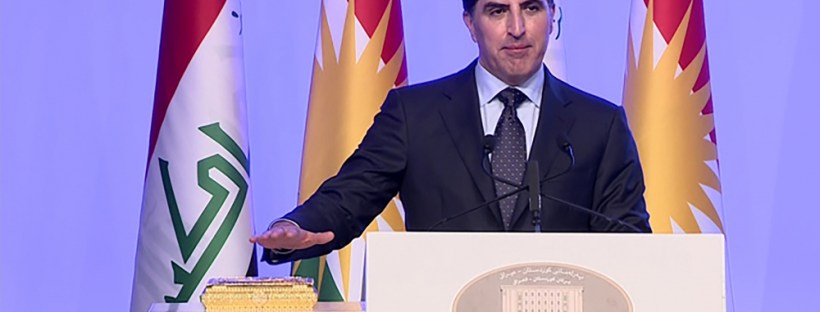
Iraqi Kurdistan, an autonomous region with a strong cultural and political identity, has been a key player in Middle Eastern geopolitics. Its internal situation, marked by aspirations for independence, political challenges, and complex relationships with Baghdad, as well as regional powers like the United States, Iran, and Turkey, positions it at the heart of regional conflicts, including the Syrian conflict. This article analyzes the dynamics of the internal situation in Iraqi Kurdistan and its international relations.
The relationship between the Kurdistan Regional Government (KRG) and the central government in Baghdad has been tumultuous and often conflictive. Although Kurdistan has held significant autonomy since 1991, its autonomous status was solidified in the aftermath of the Gulf War. Following the intervention of the U.S.-led coalition and the repression of the Kurdish uprising against Saddam Hussein’s regime, a no-fly zone was established over northern Iraq, allowing the Kurdish people to manage their own affairs. In 1992, elections were held in Iraqi Kurdistan, leading to the formation of an autonomous regional government, known as the Kurdistan Regional Government (KRG). This status was formally recognized in the 2005 Iraqi Constitution.
Tensions have escalated in recent years due to disputes over resource distribution, particularly oil. The KRG seeks control over its natural resources to strengthen its economy, while Baghdad insists on maintaining centralized control. The controversial decision by the KRG to hold an independence referendum in 2017 exacerbated these tensions, leading to a military response from the Iraqi government.
Historically, the relationship between Iraqi Kurdistan and the United States has been positive. During the Iraq War, the United States supported Kurdish forces (Peshmerga) in the fight against the terrorist group ISIS, consolidating the KRG’s position in the region. However, this dependence on the U.S. has led Kurdish leaders to carefully consider their ties with Washington, seeking to balance their relationships with regional powers, particularly Iran and Turkey.
Iran has been a significant actor in the region, exerting influence over Kurdish politics by establishing relationships with Kurdish political parties, specifically the Kurdistan Democratic Party (PDK) and the Patriotic Union of Kurdistan (PUK). This connection has translated into strategic cooperation despite ideological differences. Iran uses its influence in Kurdistan as a means to counter U.S. power in the region and secure its own hegemony in the Middle East.
In this context, Iran has promoted Iranian culture as a geopolitical and cultural tool with the Kurdish people, who are ethnically iranian (like other iranians people like farsi, pashto, tayik etc…). Within the complex Iranian geopolitical framework, Tehran acts with great caution in Iraqi Kurdistan, avoiding belligerence and utilizing a more subtle approach compared to its larger military and political maneuvers. Additionally, it is important for Iran to maintain a good relationship with the Erbil government, given the large Kurdish population residing in Iran.
In contrast, Turkey views the KRG and the PKK (Kurdistan Workers’ Party) as national security threats. The Kurdish struggle for autonomy in Turkey has created tensions between Ankara and Iraqi Kurdistan. Turkey has conducted military operations in northern Iraq to target PKK bases, leading to an ambivalent relationship with the KRG, which often finds itself in a delicate position between the need to maintain mutually beneficial relations with Turkey and its desire for autonomy.
However, Turkey also cannot fully dominate the region militarily, as Kurdistan is an Iraqi autonomous entity recognized in the Iraqi Constitution, with its powers acknowledged by the international community and strong alliances with the United States and countries like Sweden.
The Syrian Conflict and Its Implications
The Syrian conflict has added another layer of complexity to the geopolitics of Iraqi Kurdistan. The rise of Kurdish forces in Syria, especially through the People’s Protection Units (YPG), has influenced the KRG’s perception and impacted its relationship with Turkey, which considers these forces an extension of the PKK. The instability in Syria has allowed the KRG to strengthen, while also creating a context where ethnic and national tensions are increasingly pronounced across the region.
In contrast to the broader Arab Islamic world, which is caught in sectarian struggles between Shiites and Sunnis, the Kurdish world largely embraces an Indo-European Iranian culture that is secular and focuses more on ethnic-national issues than religious ones. In fact, around 10-15% of Kurds are Yazidis (Kurdish Studies, Volume 1, Number 1 (2013)), which could be considered their «national religion,» an ancient pre-Islamic faith linked to Iranian gnosticism, with its sacred city is in Lalish.
Additionally, other groups such as Assyrians and Arameans have taken refuge in the area and have been welcomed by the government of Nechirvan Barzani.
Conclusion
Therefore, the internal situation and geopolitics of Iraqi Kurdistan result from a complex interplay of internal and external factors. The struggle for independence, the relationship with Baghdad, the influence of the United States, Iran, and Turkey, as well as the repercussions of the Syrian conflict, shape an environment that is both challenging and full of opportunities. As the region faces rapid geopolitical changes, the future of Iraqi Kurdistan will depend on its ability to navigate these relationships skillfully and secure its role in the broader context of the Middle East.
Sources:
International Crisis Group. «Iraq’s Kurdish Region: Beyond the Independence Referendum.» (2019). This report analyzes the relationships between the KRG and the government of Baghdad, as well as the implications of the independence referendum.
Gunter, Michael M. «The Kurdish Question in Turkey: A Historical and Political Analysis.» Journal of South Asian and Middle Eastern Studies (2019). This article provides the historical context of Turkey’s relationship with the Kurds.
 OTRALECTURA