Saudi Arabia is one of the most important countries in the world. Its oil industry is essential for the Saudi and world economy, being the second country in oil reserves after the Venezuelan-Brazilian oil fields. Its economy is strong and stable and its growth forecast for 2024 places it at 2.6%, a forecast that will rise to 6% by 2025.
The dividends from oil and the associated industry is growing up fast. The economic income of the millions of pilgrims who attend the Hajj and Omrah as well as real estate, infrastructure and business investment around the world make Riyadh one of the richest countries in the world. Saudi Arabia, due to its tax rates, is considered a low-tax country and comfortable to invest in, very attractive. However, unlike other countries in the area such as the United Arab Emirates or Qatar, it has not been advertised abroad at the level of these other countries, hence industries such as tourism are residual although they are growing.
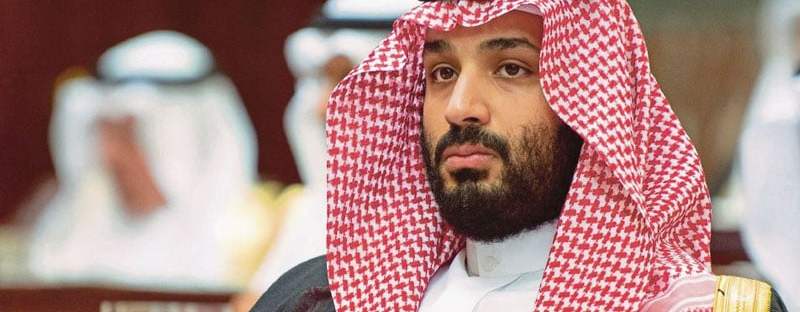
A trend that has been changing since the arrival of King Salman Bin Abdulaziz and the efforts of the Saudi Prince and Prime Minister, Mohamed Bin Salman. Investment in the development of Saudi society to integrate into the international relations model of the 21st century. In fact, megaprojects such as Neom or the fight for the 2034 football World Cup in Saudi Arabia confirm an upward trend of the Saudi government when it comes to opening up to the world through a very interesting marketing plan.
However, if there is one thing that has characterized Saudi Arabia, it has been its diplomatic discretion, sometimes confused with indecision, but above all what has marked Saudi diplomacy are the relations with the United States in the context of the Cold War, the American participation in ARAMCO or the presence of American troops in Saudi territory. If we look at the world map from 1947 to 1991, we will see that in the Middle East the situation overlapped with violent revolutionary processes and an “Arab Cold War” typical of the MENA region.
Along with the USSR-West confrontation, another war took place in the Middle East: the fall of the Arab monarchies of Egypt, Iraq, Jordan and North Yemen caused fear in the West of a possible fall of the House of Saud. The importance of the Persian Gulf oil routes by sea and the fear of Saudi Arabia falling into the Soviet sphere of influence made Washington decide to support Saudi Arabia with all its resources, especially as a counterweight to the hostility of Mohamed Reza Pahlavi, Emperor of Iran towards the West in OPEC during the 1970s, which meant that Saudi diplomacy was put on the back burner, eclipsed by American protection.
Although the Shah of Iran had nothing against Saudi Arabia, the truth is that his attitude was a problem for the West, which saw a threat in his claims to increase the price of oil. Along with this wave of Arab revolutions, already mentioned, a series of republics hostile to the Arab monarchies were established, a hostility that is reflected in places as far away from the Arabian Peninsula as in the Maghreb (hostility between the Algerian republic and the Moroccan monarchy).
The creation of a republican and socialist Arab bloc involved the creation of short-lived states such as the United Arab Republic and a struggle for control of that sphere of influence
that pivoted from the Egypt of Gamal Abdel Nasser, a leadership broken by the Camp David agreements that took Egypt out of the Soviet sphere of influence and installed it in the American sphere of influence. In parallel, the Baath split into two centers that claimed power for themselves: Syria with Hafez al Asad – Bashar al Asad and Baghdad with Saddam Hussein.
Alongside this, non-state actors appeared: from the Muslim Brotherhood, which had already existed since the 1920s in Egypt, to Qutbist militias and mujahideen volunteer groups, many of them coming from Afghanistan during the Western support against the Soviets (1979-1988). These groups of Sunni etiology attacked Saudi Arabia (assault on the great mosque in 1979 which caused 127 soldiers killed in combat and 451 wounded, 117 terrorists and 68 executions). These non-state groups with complex criminality and international networks settled in the Arabian Peninsula, the most famous of all being “Al Qaeda in the Arabian Peninsula”.
If Saudi Arabia was harassed by radical Sunni groups, the Islamic Revolution in Iran made it appear other model of combat groups like the “Shiite Jihad” in Afghanistan (through the Hazaras and Hezbollah Afghanistan), Lebanon through the Lebanese Hezbollah, split from AMAL and, of course, to Saudi Arabia). The challenge facing these groups was the creation of Hezbollah – Al Hejaz in 1987 and they launched a guerrilla war between 1987 and 1989, with their largest attack on the Khobar Towers in 1996.
The introduction of so many terrorist groups into Saudi Arabia (some linked to revolutionary processes in the region, such as the Shiite groups, and others to non-state and autonomous groups but with a great international projection) caused the Saudi system to strengthen itself and tend to prioritize extreme security over normal development and considered the regional environment (Iran or Saddam’s Iraq as hostile states).
The situation was no better abroad: the border with a hostile Iraq, the civil war in Oman (Jebel Akhdar War 1954-1959 and the Dhofar War 1962 – 1975) were a serious security problem in the east, not to mention the hostility of North Yemen, its reunification with South Yemen and the subsequent insurgency of Ansarullah (Huthi since 1994 with Najran as a constant target of terrorist attacks).
The maritime projection towards the Red Sea was not good either: a hostile Egypt, a Sudan in constant war, the war between Ethiopia and Eritrea on the coastline, and the collapse of Somalia meant more problems, in the Persian Gulf the coast of Iran and its ambitions for Bahrain and in Qatar the influence of Al Qaradawi of the Muslim Brotherhood threatened the political ideology of the Saudi system.
Only the border with the Emirates, Kuwait, Bahrein and Jordan offered guarantees.
The Arab revolutionary processes that began in 2010 in Tunisia and spread throughout the Middle East and the Maghreb meant another source of problems: wars between terrorist groups, militias and the emergence of parallel states such as the Islamic State in Iraq and Syria or the current area controlled by Al Qaeda in Idlib or the consolidation of Kurdish states (in Iraq and Syria) together with Turkmen militias meant a triple problem:
-Shiiteisation of Iraq, Syria and Yemen, creation of a zone of Iranian imperial influence
-Turkish Islam (ideology of Kenan Evren, president of Turkey from 1980-89), developed by Abdullah Gül, Ahmet Davutoglu and especially by Recep Tayyip Erdogan among the Turkmen communities of the Middle East and urban communities of the Middle East.
Along with this, Turkish expansion in Transcaucasia (supporting Azerbaijan against Armenia) and generating tension with Iran. Saudi Arabia recognize the armenian genocide in 2019 and was in the same support armenian group as Iran (a paradox).
-Crisis with Qatar 2017-2021 (now overcome) but which made both Turkey and Iran support Qatar against Saudi Arabia, in fact Turkey deployed troops in the Arab country and Iran supported Qatar. In fact Qatar is the place of refuge for members of Hamas and the late former leader of the Muslim Brotherhood, Yusuf Al Qaradawi (Khomeini took part of the inspiration for the Iranian model of the Velayat al Faquih from the Muslim Brotherhood).
Due to these challenges, the reserved character gave way to a subtle and very discreet diplomacy in the shadow of the United States, which protects the Saudi Kingdom for Washington’s own interest in maintaining its geopolitical influence but also the supply routes in a very volatile area. This implied a paradox: Saudi Arabia as the richest state in the Middle East.
Saudi Arabia is ranked 19th (with 1,069,437 million and 36 million inhabitants) in the IMF global ranking, a basic member of the G20, the Gulf Cooperation Council or the Arab League, and has hardly any geopolitical presence or influence in the region. Turkey (ranked 17th with 1,154,600 million and a population of 86) or the Islamic Republic of Iran (ranked 42nd with 366,438 million and a population of 88 million) have managed to define their own geopolitical spaces where interests or tensions converge.
The fact that Turkey has managed to energise the Balkan space with Ottomanism and, through Turanism, has managed to energise Turkmen spaces from the Turkish Republic of Northern Cyprus to Azerbaijan and, except for the Zangezur corridor, has managed to create an east-west route that connects with Europe through the aforementioned Balkans and Azerbaijan-Caspian with the immense resources of Central Asia that it projects on its southern border against the Al Assad government, the Kurdish governments of Syria (Rojava) and Iraq (Kurdistan) as well as Kurdish militia groups such as the PKK, YPG or PGY.
In fact, the Turkish “security ring” in Syria is reminiscent of the occupation of Northern Cyprus with the creation, in Syria as well, of an independent political, economic and postal system that is transitioning from being a military security occupation zone to a proto-state due to the alliance of Turkish troops and local forces of a broad spectrum (from Turkish Grey Wolves to Syrian Turkmen Brigades or HTS-Al Qaeda, in fact it has a president: Hadi al Bahra, Prime Minister Abdurrahman Mustafa and Minister of Defense Salim Idris). This geopolitical projection coincides with the deployment of more troops in Qatar (where Turkey has increased its military presence)
Iran, as we all know, implemented a political strategy based on the export of the Islamic Revolution in the form of a political strategy of militias as a model of autonomous satrapy based on several parameters: ideological alignment with Tehran, indigenous leadership with Iranian advisors, establishment of political and social structure and creation of militia forces. This is clearly seen in Lebanon and Yemen.
However, apart from the militia strategy based on Shiite ideology, ethnic, linguistic and cultural Iranianism also became stronger in order to obtain the support of non-Shiite communities but of Iranian culture (Kurds in Iraq and Syria or Pashtuns in Afghanistan, Tajiks and Pamiris in Tajikistan) or by using Iranianism to attract non-Muslim Iranian groups… such as the case of the Armenians (Christians but of Iranian ethnicity).
This meant that Iran has been taking advantage of every opportunity to export its model with notable success by seeking the sea, achieved with its presence in Syria, Lebanon or Yemen and reinforcing a rearguard (Afghanistan and Pakistan) from where it moves resources. Another place of Iranian projection is Africa, especially Nigeria through Sheikh Zakzaki or Latin America through the revolutionary ideology (in Nicaragua, Cuba or Venezuela).
The number of assets displayed by Iran include: Pakistan, Afghanistan, Bahrain, Iraq, Syria, Lebanon, Palestine (Hamas), Yemen. And is the country with most success in all this influence geopolitical work in Middle East.
Saudi Arabia, however, has projected great power in the world but not in the Middle East. It has now reestablished relations with Iran, after years of tensions, in meetings sponsored by China in 2023, Saudi Arabia but also Turkey resumed relations with Syria in 2024. Next Monday, Turkish President Recep Tayyip Erdogan will visit Saudi Arabia and Prince and Prime Minister Mohamed Bin Salman.
Saudi megaprojects are very positive and provide great financial and economic credibility as well as a profound marketing impact, but the next step should be to take advantage of geopolitical depth to make headway in an ever-hostile Middle East. If recent history has taught us anything, it is that a stable and peaceful Middle East that projects financial security and sociopolitical stability requires good relations between Iran, Turkey and Saudi Arabia. The trio Ankara – Tehran – Riyadh can only offer positive opportunities, but the Saudi government must and needs to develop a stronger, less subtle diplomacy and, above all, independent of the shadow, always dark and dangerous, of the high diplomacy of the United States.
 OTRALECTURA